
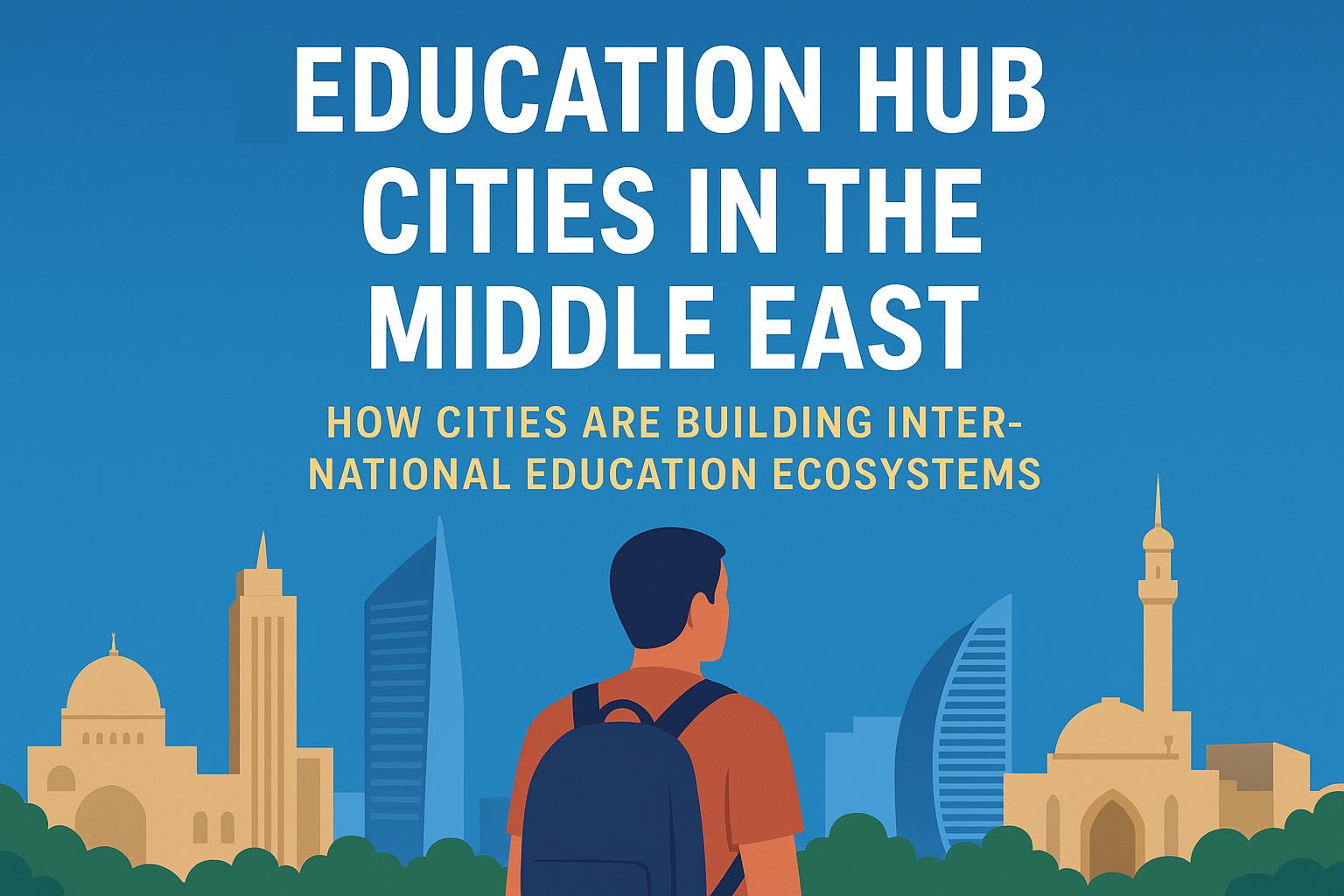
How cities like Dubai, Riyadh and Doha are building international education ecosystems, what that means for students, universities and policymakers?
Over the last decade, a small group of Middle Eastern cities have moved from hosting a handful of foreign programs to actively competing to become global education hubs. The strategy is straightforward: attract more international students, invite respected foreign universities (branch campuses and partnerships), grow local research capacity, and use higher education as fuel for economic diversification, talent retention and soft power.
This article explains the rationale behind the push, compares leading city strategies (with a focus on Dubai and Saudi plans), highlights concrete examples and practical implications for international students and editors, and offers a checklist you can use when evaluating programs and campuses. The analysis draws on official city and government strategies, regulator announcements and reporting on branch-campus licensing and partnerships.