

Scroll Top

Redefining Higher Education in the Arab World: The Shift Toward Global Competitiveness

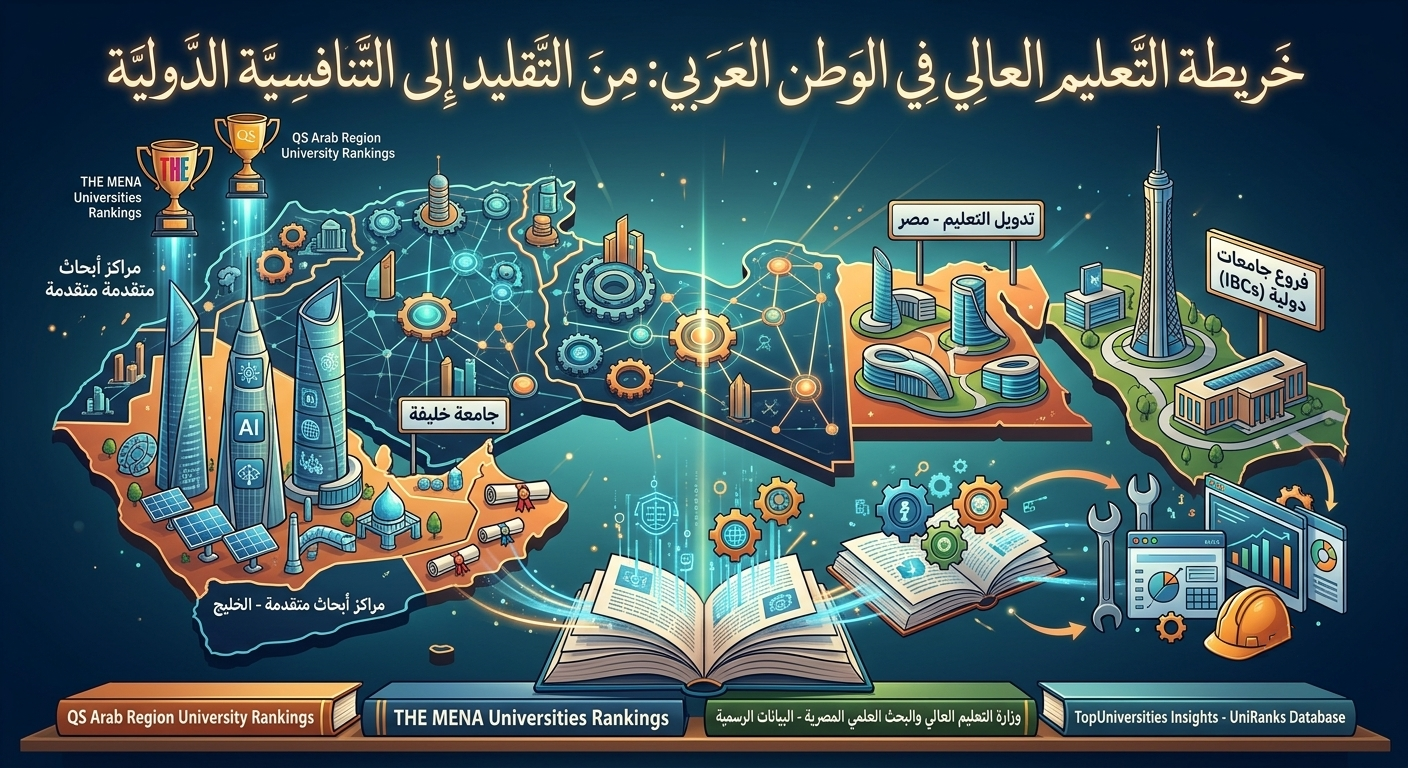
The academic landscape in the MENA region is undergoing a structural renaissance. Moving far beyond traditional mass education, regional universities are aggressively positioning themselves within elite global ranking indexes, such as QS and Times Higher Education. Driven by ambitious national blueprints and substantial capital injections, this academic evolution is completely reshaping student mobility across the region.
The GCC: Emerging Global Research Powerhouses

Gulf Cooperation Council (GCC) nations, spearheaded by Saudi Arabia and the UAE, have successfully transitioned from being primary exporters of students to establishing highly competitive research hubs. Institutions like King Abdulaziz University (KAU), KFUPM, and Khalifa University are consistently securing top tiers on global directories like TopUniversities and UniRanks.

This upward trajectory is heavily anchored in targeted funding for high-impact research in renewable energy, artificial intelligence, and water sustainability. By attracting world-class international faculty, these universities have drastically boosted their academic output and citation metrics on the global stage.

Egypt’s Strategy of Academic Internationalization

Concurrently, Egypt is executing a robust model focused on the “internationalization” of higher education. By establishing International Branch Campuses (IBCs) in its New Administrative Capital, Egypt has opened its doors to prestigious European and Canadian universities operating directly on its soil.

This model (frequently highlighted by student recruitment platforms like StudyFans and Educations.com) allows Arab and African students to earn accredited Western degrees closer to home. It significantly reduces the financial and logistical barriers of studying in the West, repositioning Cairo as a premier regional educational destination.

The Employability Challenge

Despite the impressive ascent in global rankings, education analysts emphasize that the real test lies in “bridging the gap between lecture halls and the disruptive global job market.” There is a clear, coordinated regional shift toward phasing out redundant traditional degrees in favor of applied computing, cybersecurity, and innovation management. The goal is certain: ensuring academic credentials translate directly into economic value.

References & Data Sources:


Follow Top Majors Now