
Scroll Top

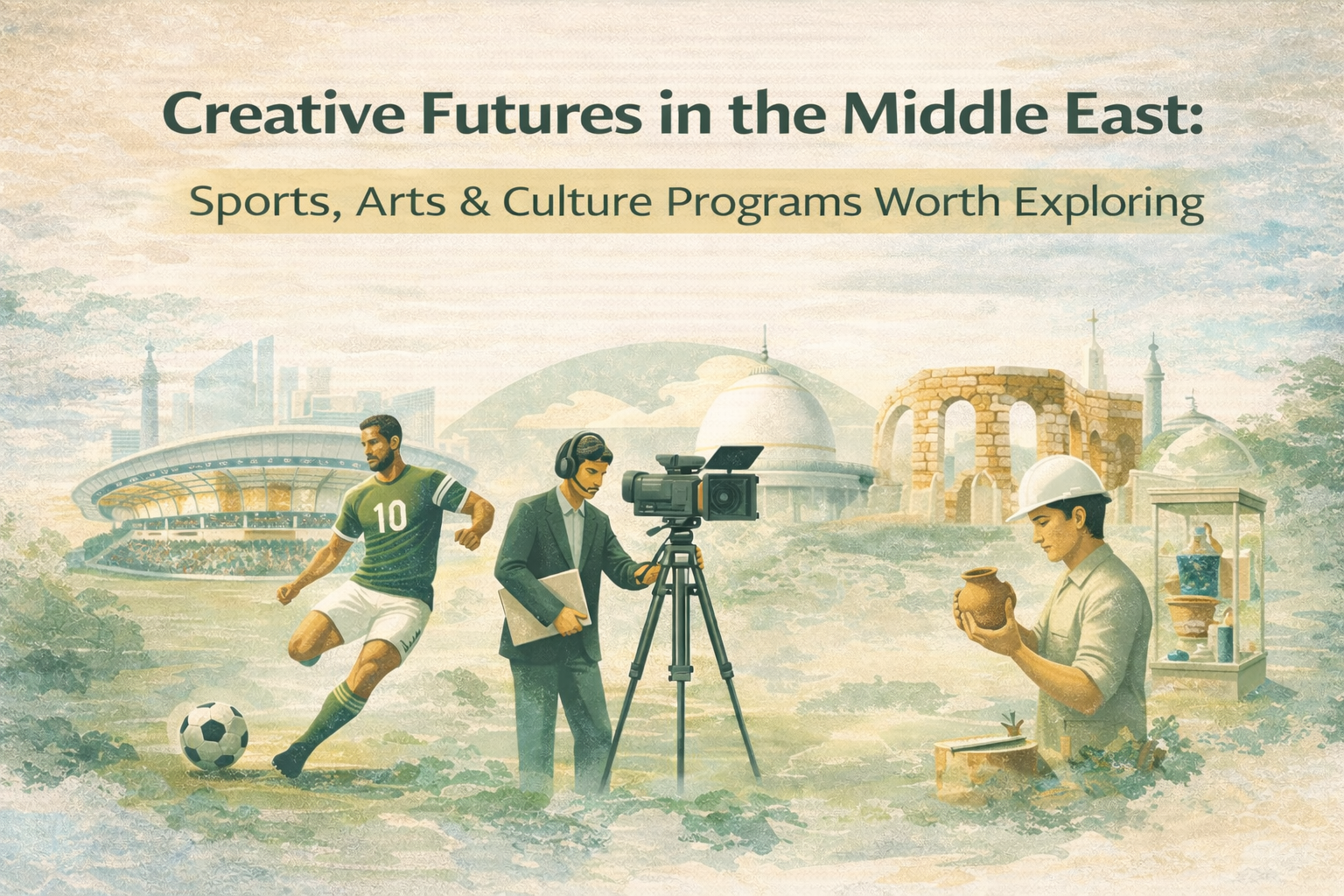
Creative Futures in the Middle East: Sports, Arts & Culture Programs Worth Exploring

Niche degrees, fast-growing fields, and where to study (with real program angles)

University coverage in the Middle East often focuses on medicine, engineering, business, and computer science. But a quieter shift is happening across the region: universities are expanding sports, arts, and culture programs that align with tourism, mega-events, creative economies, and national cultural strategies. These “niche” degrees can be highly practical, especially for students who want careers in event management, sports operations, museum work, design, media, or heritage preservation. This article uncovers the key program types in Sports, Arts, and Culture across the Middle East, what they typically include, and how students can choose the right destination.


1) Sports programs: from “fitness” to a full industry ecosystem

Sports in the Middle East have moved far beyond athletics departments. Large-scale investments in leagues, stadiums, marathons, and international events created demand for professionals in sports business, event operations, and sports science. That’s why universities increasingly offer programs such as:

A) Sports Management and Sports Business

These degrees focus on the commercial and operational side of sports, including:

  • Club and league operations

  • Sponsorship and brand partnerships

  • Ticketing and fan engagement

  • Event planning and venue management

  • Sports marketing and digital media

Who it fits: students who want roles in clubs, federations, event companies, sports marketing agencies, or sports tourism.

Where to look: universities in major hub cities (Dubai, Abu Dhabi, Doha, Riyadh, Jeddah, Cairo) often have stronger internship ecosystems because events and sports organizations are concentrated there.

B) Sports Science, Performance, and Rehabilitation

These programs are more technical and often housed within health science colleges:

  • Exercise physiology

  • Biomechanics

  • Sports injury prevention

  • Strength and conditioning

  • Sports nutrition (sometimes a specialized track)

Who it fits: students aiming for careers in performance training, sports therapy, athletic conditioning, or research.

Tip: For this track, look for universities with labs, clinics, and partnerships with hospitals or professional teams.

C) Event & Venue Management (sports-adjacent)

Some universities don’t label it “sports” but offer programs that connect directly:

  • Events management

  • Hospitality and tourism with a sports events concentration

  • Facilities management (stadiums and large venues)

Why it matters: Many graduates enter sports through events and operations rather than directly through “sports management.”


2) Arts and design: practical creative degrees are expanding

Across the region, governments are investing in creative industries (design, film, gaming, advertising, architecture, fashion). Universities respond with programs designed to feed those sectors.

A) Design programs (high-demand, portfolio-based)

Common degree areas:

  • Graphic design and visual communication

  • UI/UX and digital product design

  • Interior design and spatial design

  • Industrial design and product design

  • Motion graphics and animation

How to choose well: prioritize programs that show:

  • Student portfolios and exhibitions

  • Industry briefs and real client projects

  • Internship pipelines with studios and agencies

B) Film, media, and digital storytelling

These programs typically include:

  • Screenwriting, directing, cinematography

  • Editing and post-production

  • Journalism and broadcast media

  • Digital content production and social media strategy

Best-fit cities: media hubs and places with active production ecosystems often provide better practical training opportunities through internships.

C) Music and performing arts (emerging but growing)

Some universities offer:

  • Music performance and education

  • Theatre and acting

  • Performing arts management

Reality check: these programs vary widely in quality, so students should look for strong faculty profiles and public performances as proof of active training.


3) Culture and heritage: degrees linked to museums, tourism, and preservation

A distinct regional strength in the Middle East is heritage-related education, because cultural preservation, archaeology, and museum development are deeply connected to national identity and tourism.

A) Archaeology and heritage studies

These programs often include:

  • Field archaeology methods

  • Conservation and preservation

  • Ancient languages and history (varies)

  • Cultural policy and heritage management

Who it fits: students interested in museums, excavation projects, cultural institutions, and academic research.

B) Museum studies and curatorial practice

Growing programs cover:

  • Museum operations and collections management

  • Exhibition design and curation

  • Digitization and archival technologies

  • Public programming and education

Why it’s rising: new museums, cultural districts, and tourism initiatives increase the demand for trained professionals.

C) Tourism, culture, and destination management

Many universities offer tourism degrees, but the niche angle is:

  • Cultural tourism planning

  • Destination branding

  • Heritage site management

  • Experience design (tours, festivals, heritage routes)

Tip: For students, the best programs include practical modules like field trips, event projects, and partnerships with tourism boards.


4) How to pick the right program (fast checklist)

Before applying, students should check:

  1. Outcome clarity: What jobs does this program realistically lead to?

  2. Practical training: internships, studios, labs, exhibitions, fieldwork

  3. Location advantage: city ecosystems matter (events, museums, studios, clubs)

  4. Language of instruction: English-taught options widen mobility

  5. Portfolio vs exams: arts/design careers require strong portfolios
  6. Industry ties: guest speakers, partner organizations, real projects

Conclusion:

Sports, arts, and culture degrees in the Middle East are no longer “extra” majors; they’re increasingly linked to real industries and national growth strategies. The best programs combine academic grounding with practical training, strong partnerships, and clear career pathways. For students, this is good news: you can now study sports management, digital media, design, heritage, and museum work within the region and still build globally relevant skills, especially if you choose universities that offer internships, real projects, and active professional networks.